

Una cámara HALT/HASS es una inversión de capital de la misma clase que una máquina de CNC o una célula de una línea de producción, y su precio lo determinan de forma abrumadora dos cosas: el tamaño de la mesa de vibración y si el sistema térmico usa nitrógeno líquido o refrigeración mecánica. Casi cualquier otra opción mueve la cifra menos que esas dos. Esta página explica qué determina el precio, cómo son los rangos unos respecto a otros y lo que cuesta hacer funcionar la cámara una vez instalada.
La mayoría de los fabricantes de esta categoría no publican absolutamente nada sobre el precio. Hay un argumento razonable para ello: cada sistema se configura, y una cifra sin una configuración asociada induce a error. Hay también otro menos razonable, y es que un comprador que no puede formarse un presupuesto no puede iniciar una conversación. Esta página es nuestro intento de alcanzar el término medio útil: información real sobre lo que mueve la cifra, sin fingir que un sistema de capital configurado tiene un precio de etiqueta. Si todavía está comparando especificaciones, empiece por nuestra guía del comprador de cámaras HALT/HASS.
Qué determina realmente el precio
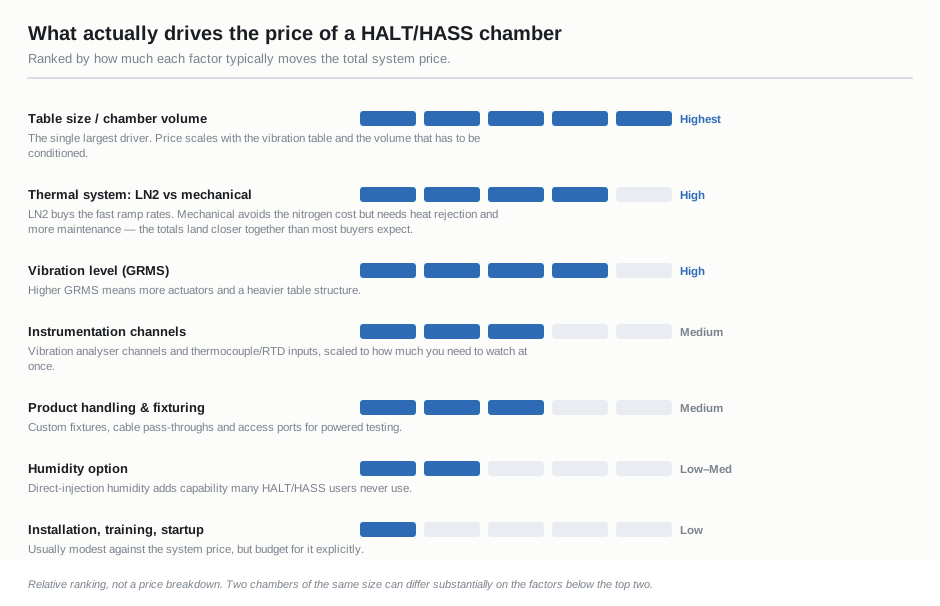
1. Tamaño de la mesa y volumen de la cámara
El factor más importante con diferencia, y no es lineal. Una mesa mayor necesita más actuadores neumáticos para alcanzar los mismos GRMS, una estructura más pesada para soportarlos y un volumen mayor que acondicionar a la misma velocidad. Duplicar la superficie de la mesa más que duplica el trabajo que tiene que hacer el sistema térmico.
Por eso la cuestión del dimensionado merece una reflexión seria antes de empezar a comprar. Comprar dos tamaños más "por si acaso" sale caro; comprar un tamaño de menos es peor, porque no tiene arreglo.
2. Nitrógeno líquido o refrigeración mecánica
El LN2 es la forma en que una cámara alcanza las velocidades de cambio del producto* que hacen que el HALT funcione: del orden de 60 a 70 °C por minuto. La suposición habitual es que la refrigeración mecánica es la vía más barata — más barata de comprar, más barata de usar, con una rampa más lenta como precio a pagar —. Según nuestra experiencia no es tan sencillo, y esa suposición cuesta dinero a los compradores en ambos sentidos.
En la propia cámara, el sistema de LN2 suele ser la máquina menos cara. Es mecánicamente más sencillo; no lleva incorporado ningún grupo de compresores.
Las dos vías necesitan infraestructura, y ninguna es gratis. El LN2 necesita un tanque y tubería con aislamiento de vacío, además de monitorización de oxígeno en la sala. Una cámara con refrigeración mecánica tiene que evacuar su calor en algún sitio, y en los tamaños grandes eso suele significar instalaciones de agua refrigerada: una obra en el edificio, no una entrega.
A lo largo de la vida de la cámara, el sistema mecánico es el más complejo de mantener. El nitrógeno es un coste recurrente real, normalmente la mayor partida individual de una cámara de LN2 en uso diario. Pero una vez que se contraponen la planta de agua refrigerada y el mantenimiento de los compresores, las dos vías suelen quedar más cerca de lo que sugiere el titular.
Por qué el LN2 parece más caro de lo que es. Las dos vías casi nunca se contabilizan de la misma manera. El LN2 es fácil de imputar a la cámara: suele ser lo único de la planta que usa nitrógeno, así que la factura llega con el nombre de la cámara. La electricidad, el agua y la parte de la planta de agua refrigerada de una cámara con refrigeración mecánica rara vez se le asignan: desaparecen en el presupuesto de instalaciones, y la obra del agua refrigerada suele contabilizarse como un coste del edificio y no como parte de la compra. La comparación que hacen la mayoría de los compradores es entre un coste totalmente visible y otro casi oculto.
Lo que no se iguala es la velocidad de rampa. Para un cribado HASS consolidado, la rampa más lenta puede ser perfectamente aceptable. Para un HALT de verdad, en el que se intenta hallar límites reales, cambia lo que se descubre.
Así que compare el coste instalado y el mantenimiento en lugar del precio de la cámara, y deje que la velocidad de cambio del producto* que realmente necesita lo decida. Esa es la única diferencia entre ambas que ninguna ingeniería de planta iguala.
3. Nivel de vibración
Más GRMS significa más actuadores y una mesa más pesada. Pregunte qué significa la cifra presupuestada: un valor de GRMS medido en una mesa vacía no es el que verá con un utillaje y un producto atornillados encima.
4. Canales de instrumentación
Canales de análisis de vibración y entradas para termopares y RTD. En los sistemas Hanse esto es ChamberDAQ para la adquisición de datos ampliable y ChamberFFT para el análisis de vibración, hasta 16 canales. Quedarse corto aquí es un falso ahorro: la idea es precisamente ver lo que el producto ha experimentado, y los canales salen mucho más baratos al hacer el pedido que como adaptación posterior.
5. Utillajes y manipulación del producto
Utillajes a medida, pasamuros de cables y puertos de acceso para el ensayo con alimentación. Muy variable: una simple placa de fijación por tornillos es barata; un utillaje para un conjunto difícil que debe ir instrumentado y alimentado, no. Presupuéstelo de forma explícita en lugar de descubrirlo tarde.
6. Humedad
Humedad por inyección directa, normalmente en el rango del 10 al 85 % de HR entre 25 y 65 °C. Merece la pena tenerla si su producto la necesita de verdad. Un número significativo de compradores la especifica y nunca la usa, porque los perfiles clásicos de HALT y HASS son solo de temperatura y vibración.
7. Instalación, formación y puesta en marcha
Normalmente modestos frente al precio del sistema, pero reales. Introducir una cámara grande en un edificio no siempre es sencillo, y el valor de una formación adecuada en el desarrollo de perfiles es alto: una cámara mal utilizada es una forma cara de generar una falsa confianza.
Coste relativo por clase de cámara
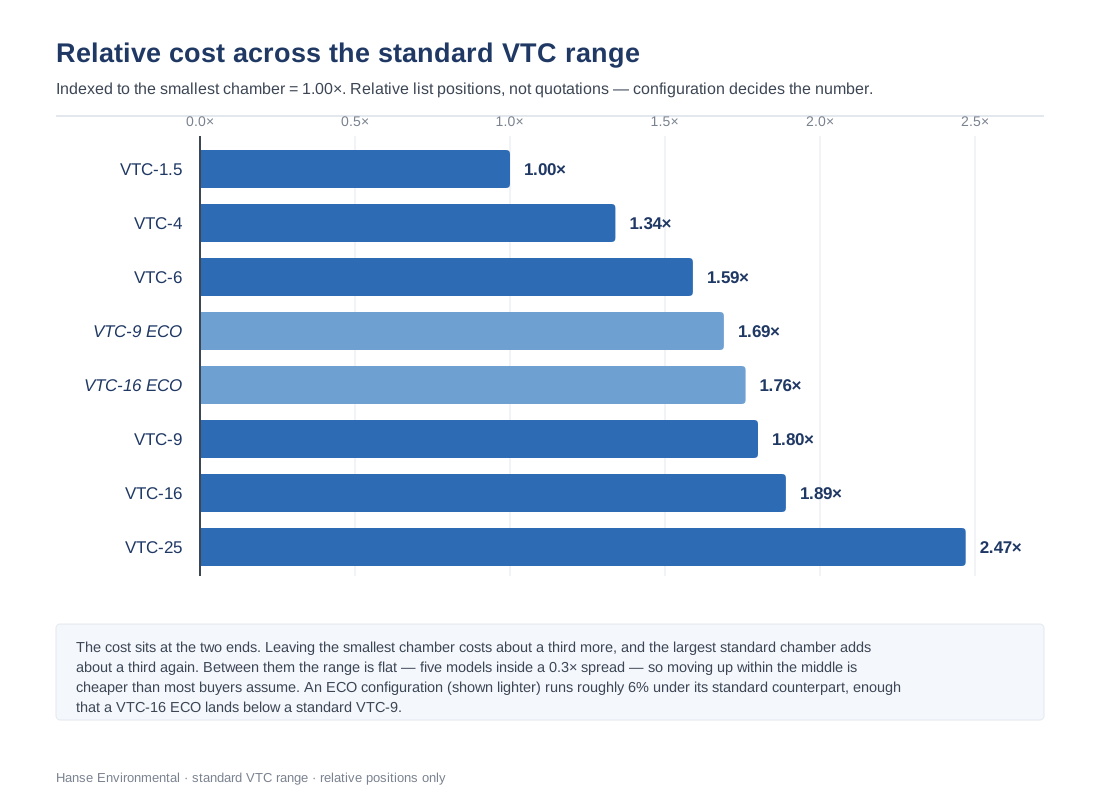
En los ocho modelos del VTC-1.5 al VTC-25, toda la escala abarca aproximadamente 2,5×, y los escalones son desiguales. Subir desde el VTC-1.5 cuesta alrededor de un tercio más; el siguiente escalón añade de nuevo alrededor de una quinta parte. Después el rango se aplana — cinco modelos caben en una horquilla de 0,3× —, así que subir dentro de la parte central es más barato de lo que la mayoría de los compradores supone. El salto al VTC-25 añade por sí solo alrededor de un 30 %.
El precio no escala con la superficie de la mesa. El VTC-25 ofrece unas nueve veces la mesa del VTC-1.5 por alrededor de dos veces y media el coste. Los dos extremos del rango concentran casi todo ese coste, mientras que la parte central — donde realmente compra la mayoría — apenas se mueve. Una configuración ECO queda alrededor de un 6 % por debajo de su equivalente estándar, lo suficiente para que un ECO pueda quedar por debajo de una cámara estándar un escalón más abajo en la gama. Por eso la pregunta útil no es "¿cuánto cuesta una cámara más grande?", sino "¿cuánto cuesta esta configuración?".
Qué suele estar incluido y qué no
| Normalmente incluido | Normalmente un extra | A menudo olvidado |
|---|---|---|
| Cámara, mesa de vibración y actuadores | Utillajes a medida | Tanque de LN2 y tuberías de la instalación |
| Sistema térmico y controlador | Canales de instrumentación adicionales | Monitorización de oxígeno en la sala |
| Paquete básico de instrumentación | Opción de humedad | Capacidad de suministro de aire comprimido |
| Software de control | Garantía ampliada | Carga admisible del suelo y acceso para el izado |
| Puesta en marcha y formación básica | Soporte para el desarrollo de perfiles | Contrato de calibración anual |
Los costes que continúan después de la orden de compra
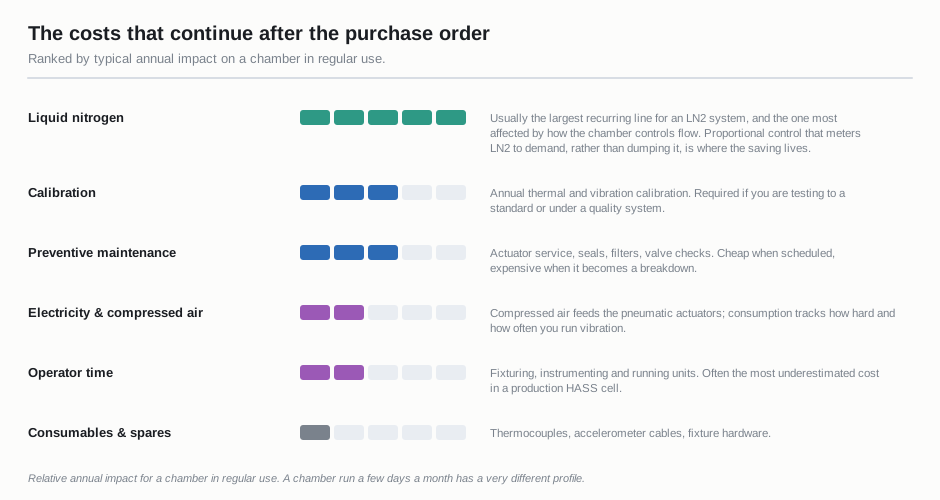
El nitrógeno líquido es la partida que sorprende
En un sistema de LN2 de uso habitual, el nitrógeno suele ser el mayor coste recurrente, y varía enormemente entre cámaras de especificación similar, porque depende de cómo dosifique el caudal la cámara.
Un sistema que controla el LN2 con una simple electroválvula todo/nada descarga nitrógeno para alcanzar la consigna y después la sobrepasa. Un sistema con válvula de control proporcional dosifica el caudal según la demanda real. A lo largo de quince años de vida útil en una cámara que funciona a diario, la diferencia entre esos dos planteamientos no es un error de redondeo: puede rivalizar con una fracción significativa del precio de compra original.
El sistema de nitrógeno líquido HighRate de Hanse usa atomización directa en el plenum de control con control proporcional y un cierre de seguridad secundario, que dosifica el nitrógeno según la demanda real en lugar de descargarlo hasta una consigna.
Cuando compare presupuestos, pregunte directamente a cada proveedor cómo controla su cámara el caudal de nitrógeno. Es una pregunta justa, la respuesta no es confidencial, y le dirá más sobre su coste a diez años que cualquier cifra del presupuesto.
Calibración y mantenimiento
La calibración anual de temperatura y vibración es obligatoria si ensaya conforme a una norma o trabaja bajo un sistema de calidad. El mantenimiento preventivo — revisión de actuadores, juntas, filtros, comprobación de válvulas — es barato cuando se programa y caro cuando se convierte en una avería en mitad de un cribado de producción. Pregunte quién realiza el servicio, a qué distancia está y cuánto cuesta una visita antes de comprar, no después.
La comparación que de verdad lo decide: ¿en sus instalaciones o externalizado?
Para muchos compradores la verdadera pregunta no es qué cámara comprar, sino si comprar una siquiera. La versión honesta de esa comparación:
| Cámara propia | Laboratorio de ensayos externo | |
|---|---|---|
| Forma del coste | Capital por adelantado, bajo coste marginal por ensayo | Sin capital, coste significativo por ensayo |
| Punto de equilibrio | Favorece los ensayos frecuentes y continuados | Favorece los ensayos ocasionales y puntuales |
| Calendario | Ensaye cuando quiera, itere el mismo día | Reservar, enviar, esperar, recibir el informe |
| Velocidad de iteración | Corregir y volver a ensayar en cuestión de horas: la mayor ventaja oculta | Cada iteración es un nuevo encargo |
| Exposición de la propiedad intelectual | El producto nunca sale del edificio | Los prototipos y los datos de ensayo van a un tercero |
| Conocimiento | Tiene que crearlo | Lo está comprando |
| HASS de producción | Viable | En general inviable: no se puede enviar fuera cada unidad |
La regla general: si necesita cribado de producción, hacerlo en sus instalaciones es en la práctica la única respuesta viable, porque enviar cada unidad a un laboratorio no es un proceso. Si necesita un HALT de desarrollo ocasional en un producto al año, lo más probable es que un laboratorio de ensayos salga más a cuenta. Los casos interesantes están entre medias, y ahí el factor decisivo suele ser la velocidad de iteración más que el coste: los equipos de ingeniería que pueden ejecutar un HALT, corregir algo y volver a ejecutarlo la misma tarde encuentran problemas a los que los equipos que trabajan con un ciclo de laboratorio de dos semanas nunca llegan.
Cómo construir una cifra de presupuesto defendible
Si tiene que presentar una cifra a un comité financiero, trabájela en este orden:
- Dimensione a partir del producto, más el crecimiento. Mida su mayor dispositivo bajo ensayo actual con su utillaje, y después pregúntese qué ensayará dentro de cinco años.
- Decida entre LN2 o mecánica según la velocidad de cambio del producto* que realmente necesita, medida en el producto, no en el aire.
- Especifique los canales de instrumentación con honestidad. Cuente los termopares y acelerómetros que quiere observar simultáneamente y añada margen.
- Añada los costes de la instalación. Suministro de LN2, monitorización de oxígeno, aire comprimido, carga admisible del suelo, acceso para el izado.
- Añada el coste de funcionamiento del primer año: nitrógeno, calibración, un contrato de servicio. Para una cámara con refrigeración mecánica, incluya la electricidad, el agua y la capacidad de agua refrigerada que consume, aunque normalmente los absorbería el departamento de instalaciones. De lo contrario estará comparando un coste completo con uno parcial.
- Construya la alternativa. Valore el mismo programa de ensayos en un laboratorio externo a cinco años. Esa comparación, y no el precio de la cámara por sí solo, es lo que un comité financiero decide realmente.
*Medida a 102 mm (4 in) sobre el centro de la mesa, de −65 °C a +100 °C.