
Vibration testing exposes a product to controlled mechanical vibration — replicating the stress of transportation, operation, or real-world use — to find structural weaknesses, loose components, and design flaws before they cause a field failure. It's a core part of environmental stress testing programs across automotive, aerospace, electronics, and defense manufacturing, and it's frequently required by customer or industry standards, not just good practice.
Why It Matters
A solid vibration test program finds design and assembly weaknesses early, when they're inexpensive to fix. It reduces warranty claims and recalls by catching the failure modes — cracked solder joints, loosened fasteners, fatigued structures — that vibration reliably exposes and static testing doesn't. It's often a compliance requirement: automotive, aerospace, and defense contracts commonly specify vibration testing to a named standard as a condition of the purchase order. And it shortens development cycles by giving engineers real failure data to act on early, instead of discovering the same issues after tooling is locked in.
Vibration Test Methods
These are the test profiles you actually run on a vibration system:
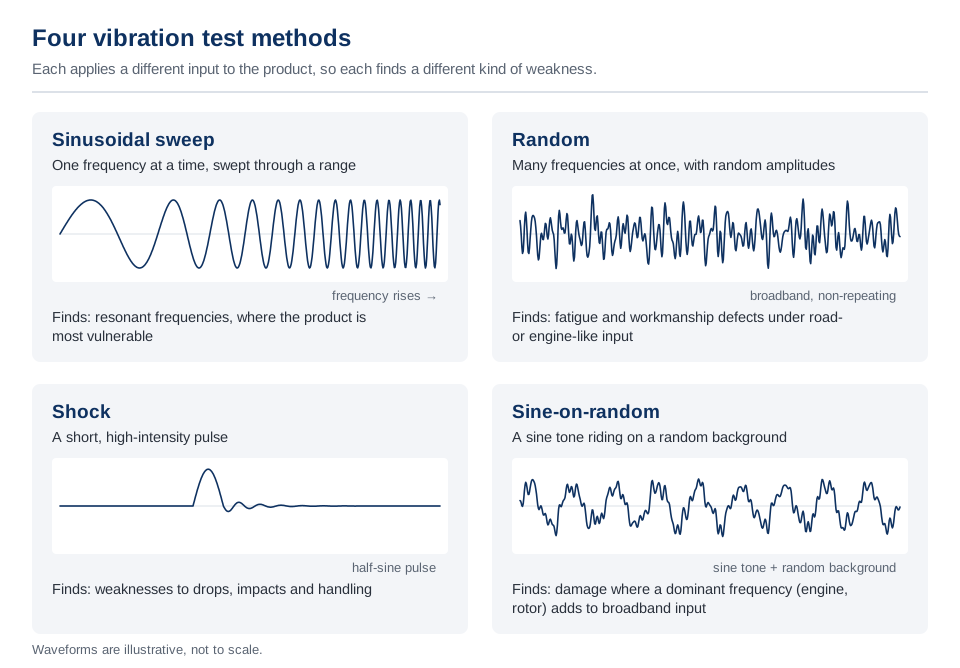
Sinusoidal vibration testing applies a single frequency that sweeps through a range, varying in amplitude — the standard way to identify a product's resonant frequencies, where it's most vulnerable to damage.
Random vibration testing applies a broad spectrum of frequencies and amplitudes simultaneously, more closely simulating real-world environments like road vibration or engine operation than a single sweeping frequency does.
Shock testing applies sudden, high-intensity vibration to simulate impacts or drops — a different stress profile from sustained vibration, aimed at handling and impact resilience rather than fatigue.
Combined (sine-on-random) testing layers a sinusoidal sweep on top of a random vibration background, for applications where real-world conditions include both — common in aerospace and automotive testing where a dominant frequency (like an engine or rotor) rides on top of broader environmental vibration.
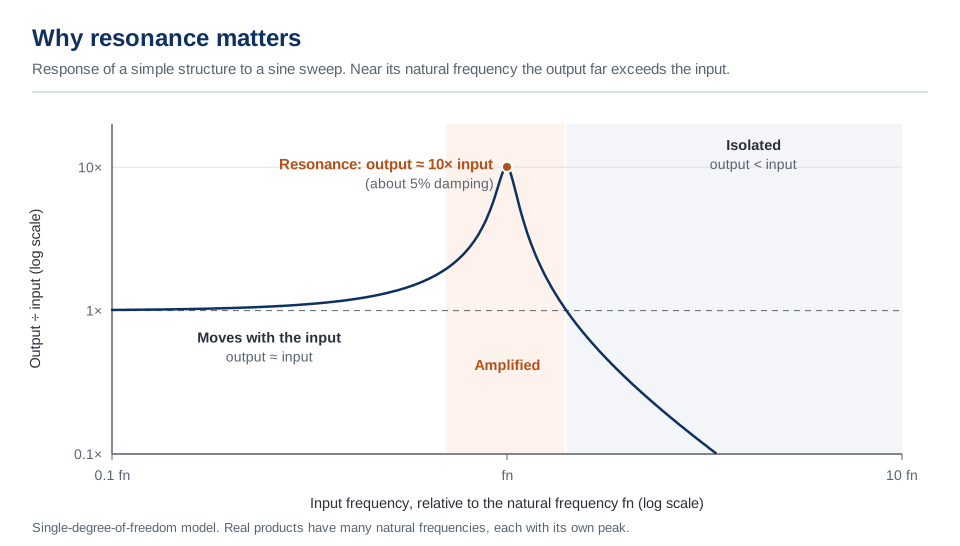
A sine sweep matters because of resonance. Below its natural frequency a structure simply moves with the input; at the natural frequency it amplifies the input many times over; well above it, the structure is isolated from the input. That peak is where solder joints crack and brackets fatigue, which is why finding it comes first.
Types of Vibration Behavior
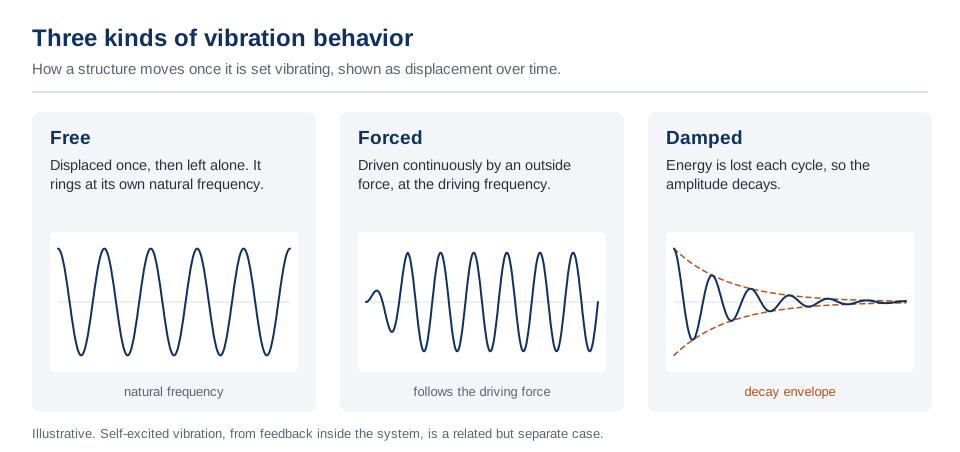
Free vibration occurs when a system is displaced and then vibrates on its own, without continued external force — used to identify a structure's natural frequencies.
Forced vibration occurs when an external force continuously drives the system at a specific frequency, simulating conditions like a running engine or motor.
Damped vibration describes the gradual loss of amplitude over time as energy dissipates — the behavior that shock absorbers and vibration-isolation mounts are designed to produce.
A related but distinct phenomenon, self-excited vibration, arises from internal feedback within a system (common in rotating machinery) rather than an external driving force, and can produce unpredictable oscillation — worth knowing about, but not one of the three fundamental categories above.
Measuring Vibration: Accelerometer Types
Vibration is measured with accelerometers, and the right type depends on the application:
| Type | Strength | Typical use |
|---|---|---|
| Piezoelectric | High sensitivity across a wide frequency range | The industrial standard for vibration and shock testing |
| Capacitive | Measures down to very low frequencies | Structural monitoring and other low-frequency work |
| MEMS | Compact and light | Portable or space-constrained test setups |
Standards That Commonly Apply
| Standard | Industry | Covers |
|---|---|---|
| MIL-STD-810 | Military and aerospace | Environmental testing, including vibration |
| ISO 16750 | Automotive | Environmental requirements for electrical and electronic equipment |
| RTCA DO-160 | Avionics | Environmental conditions and test procedures for airborne equipment |
| IEC standards | Various | Depends on the product category |
If you're supplying to an automotive OEM, aerospace prime, or defense contractor, check their supplier requirements early — the specific standard and severity level are frequently non-negotiable parts of the contract, and it's far cheaper to design your test program around them from the start than to retrofit later.
Practical Tips for Optimizing Vibration Testing Procedures
To maximize the benefits of vibration testing, consider the following actionable recommendations:
- Develop realistic test profiles. Use field data or industry standards to create vibration profiles that closely replicate actual conditions. Avoid generic tests that may not reveal critical weaknesses.
- Perform pre-test analysis. Conduct modal analysis to identify natural frequencies and avoid resonance during testing, which can cause misleading results or damage.
- Use proper mounting techniques. Secure the test specimen correctly to prevent unintended movement or damage. The mounting method can significantly affect test accuracy.
- Monitor test parameters continuously. Track acceleration, displacement, and frequency in real time to detect anomalies early and adjust tests as needed.
- Combine environmental factors. Integrate temperature, humidity, and vibration testing to simulate complex operational environments, especially for aerospace and military products.
- Document and analyze results thoroughly. Maintain detailed records of test conditions and outcomes. Use this data to refine designs and improve future testing protocols.
By following these steps, you can enhance the reliability of your testing process and deliver products that meet stringent quality standards.
Hanse's Vibration Systems at a Glance
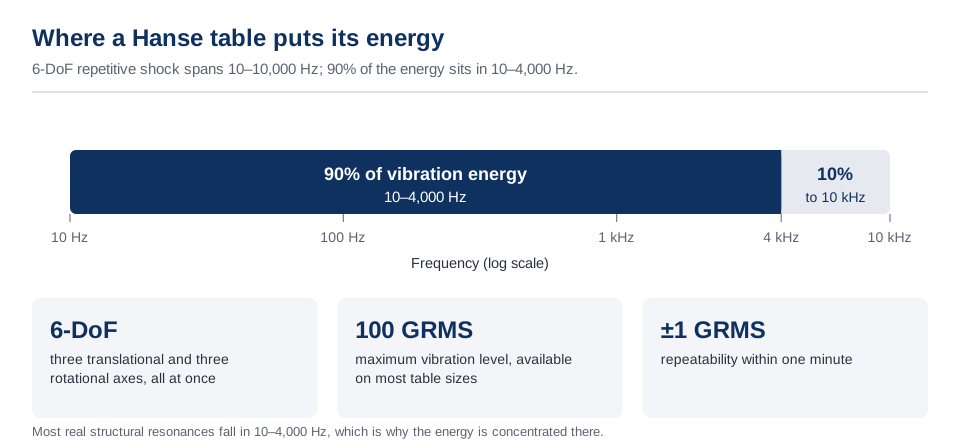
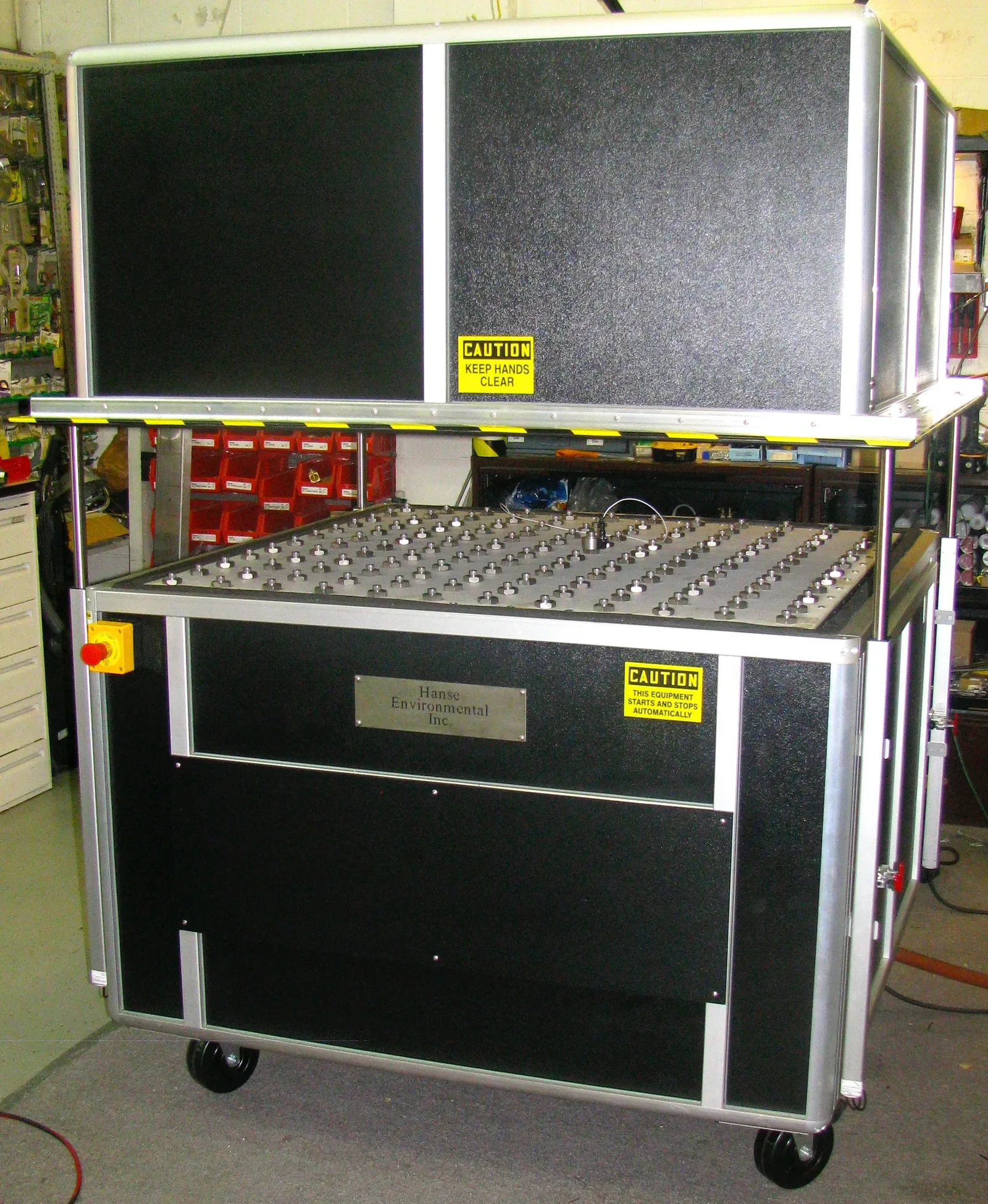
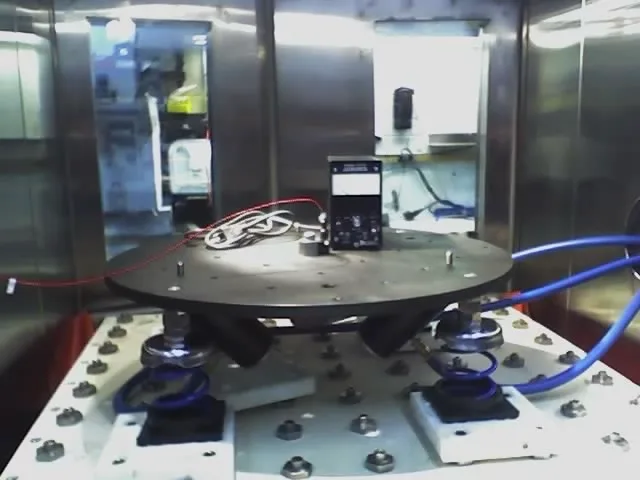
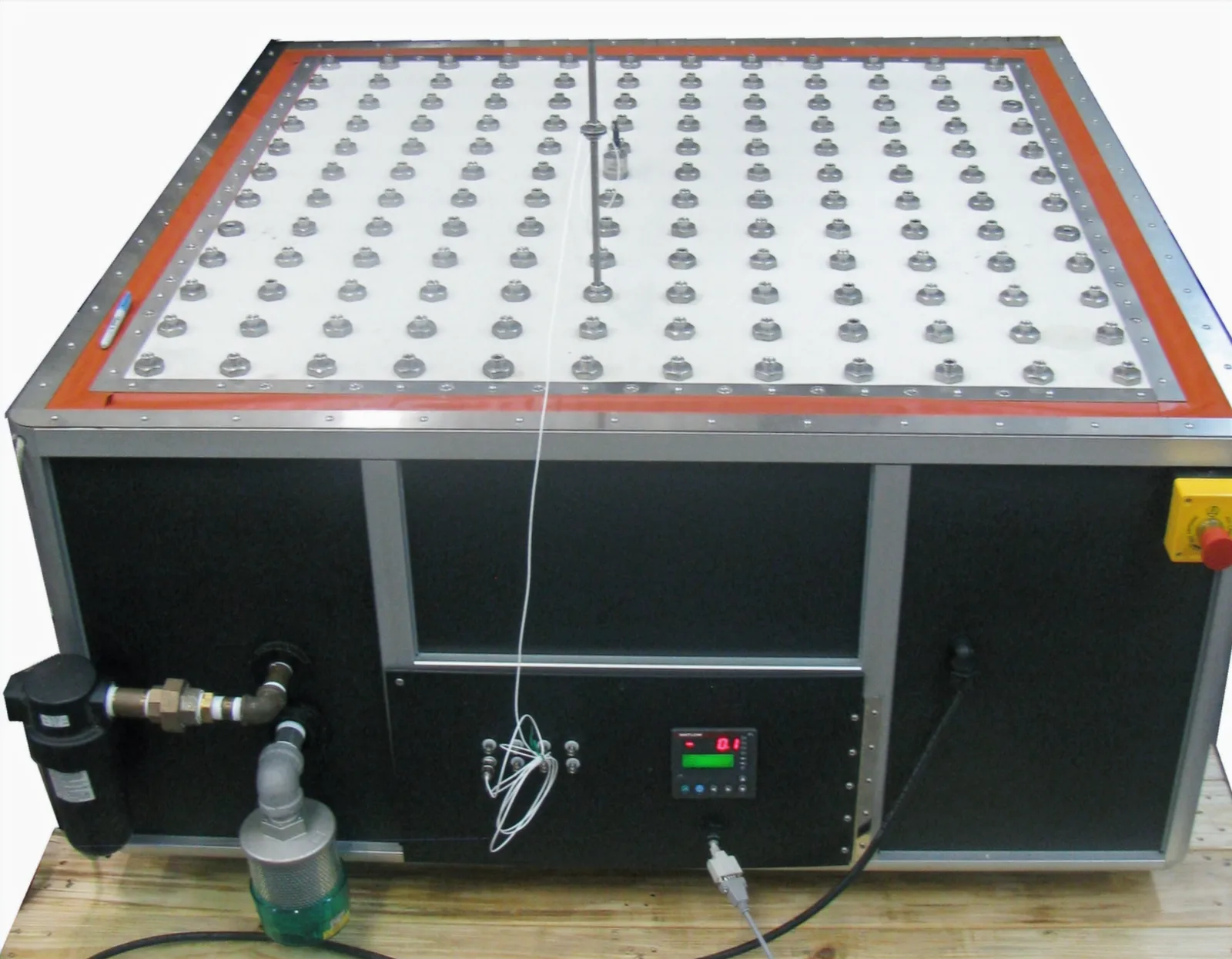
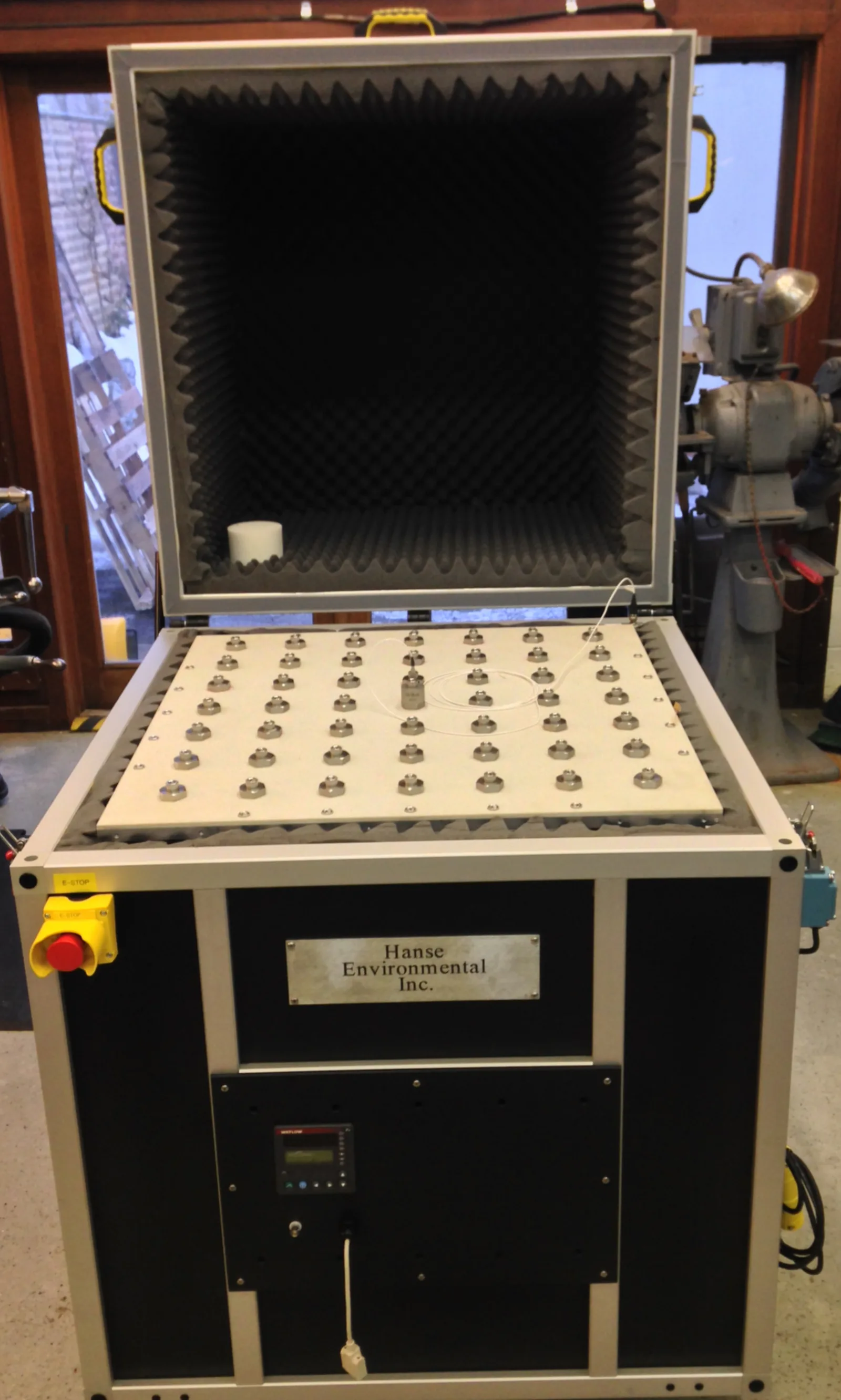
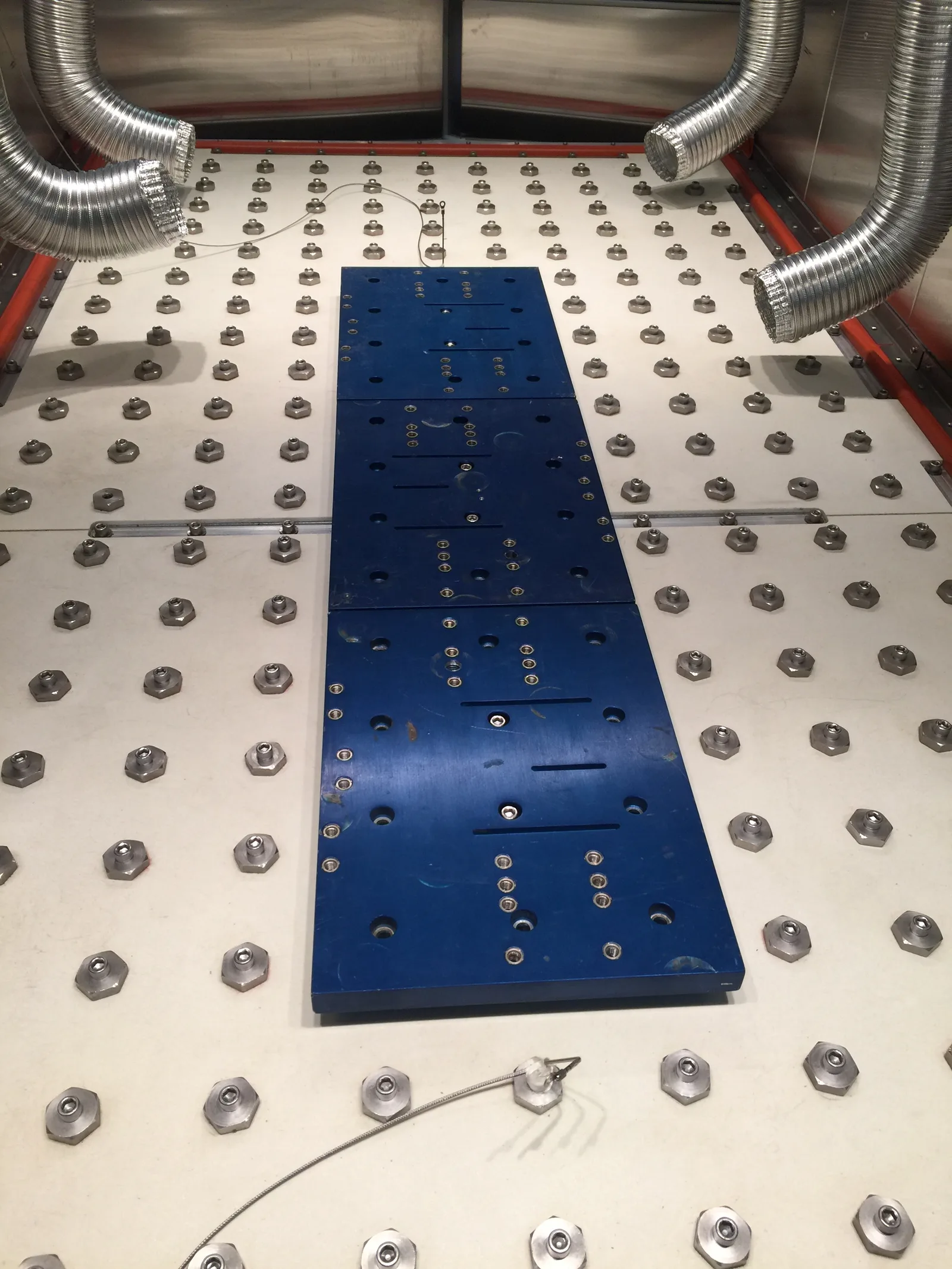
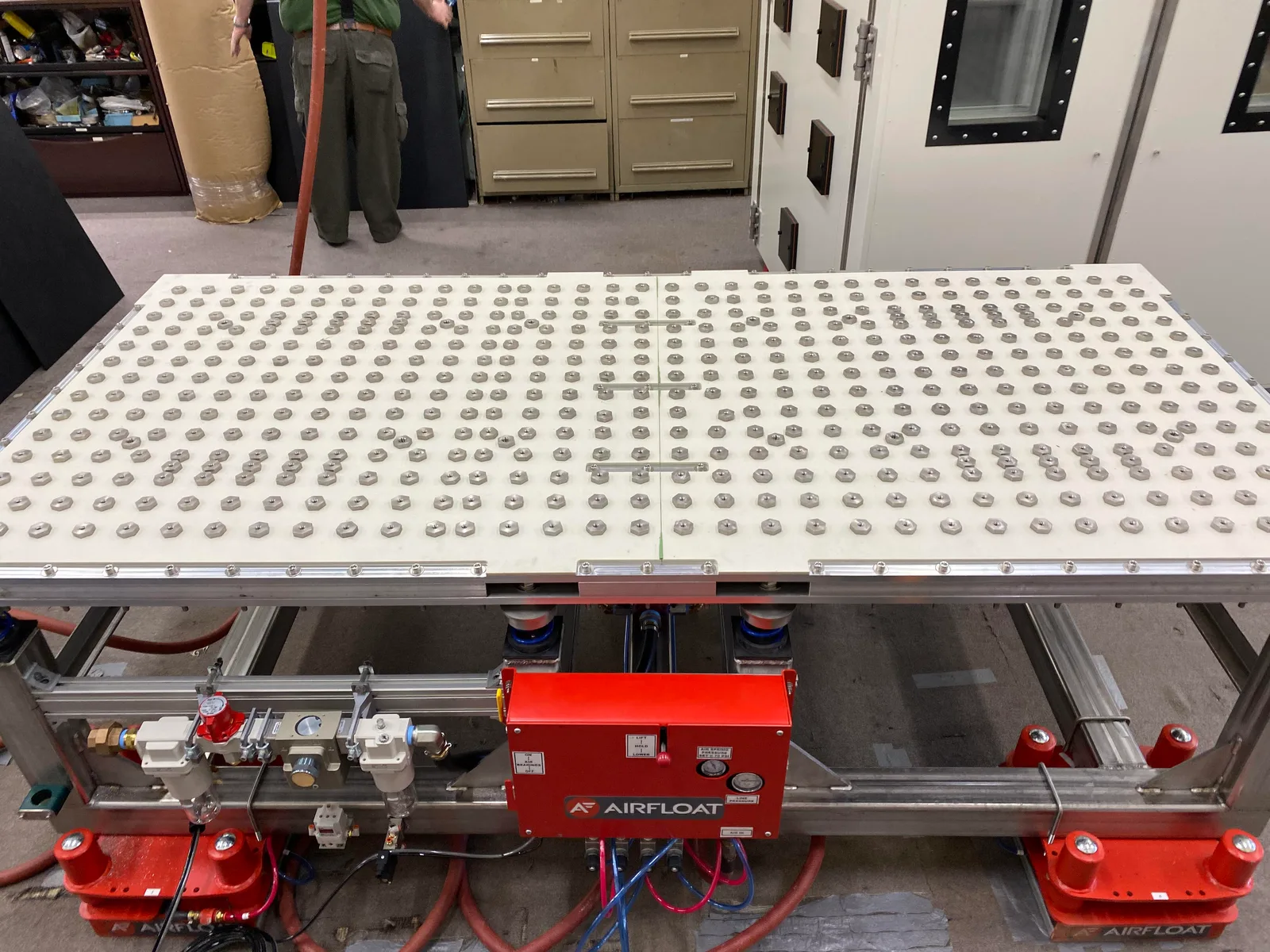
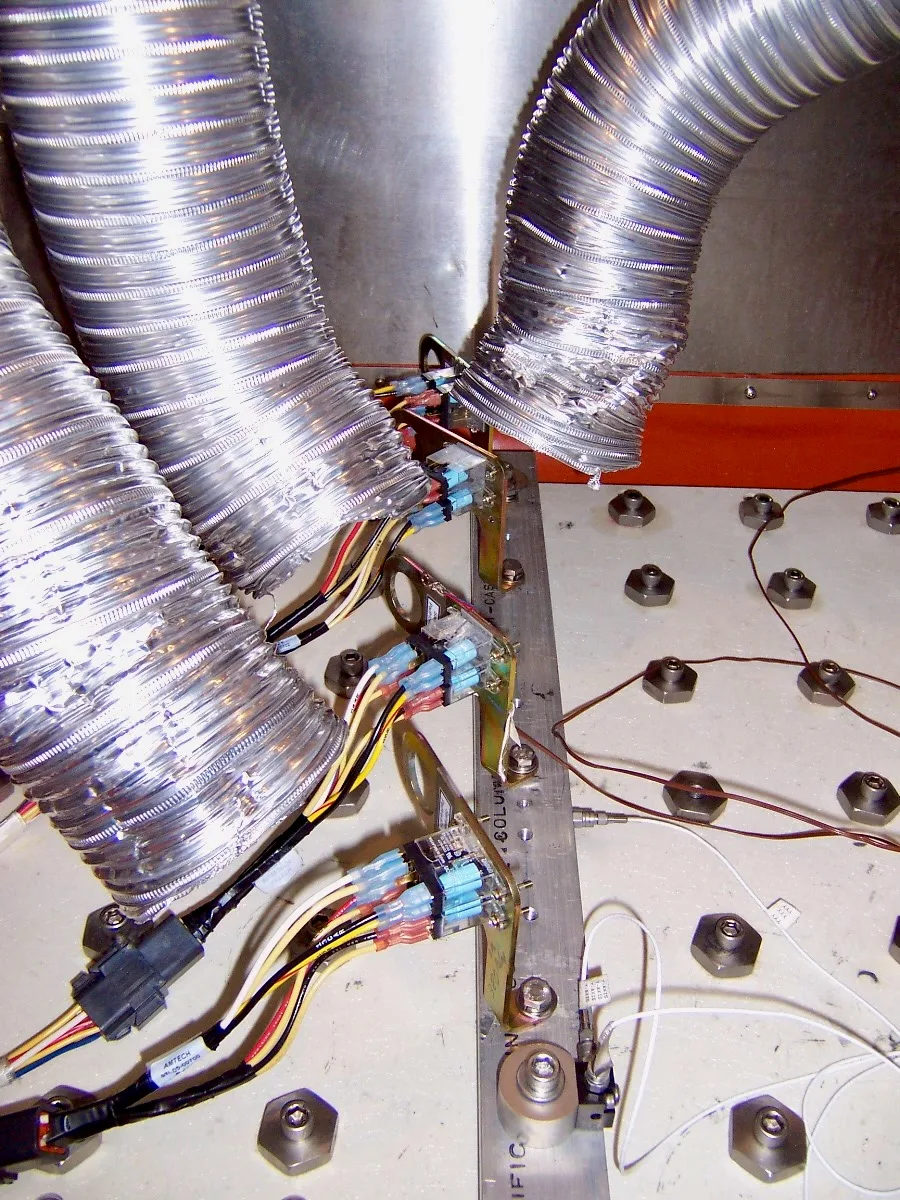
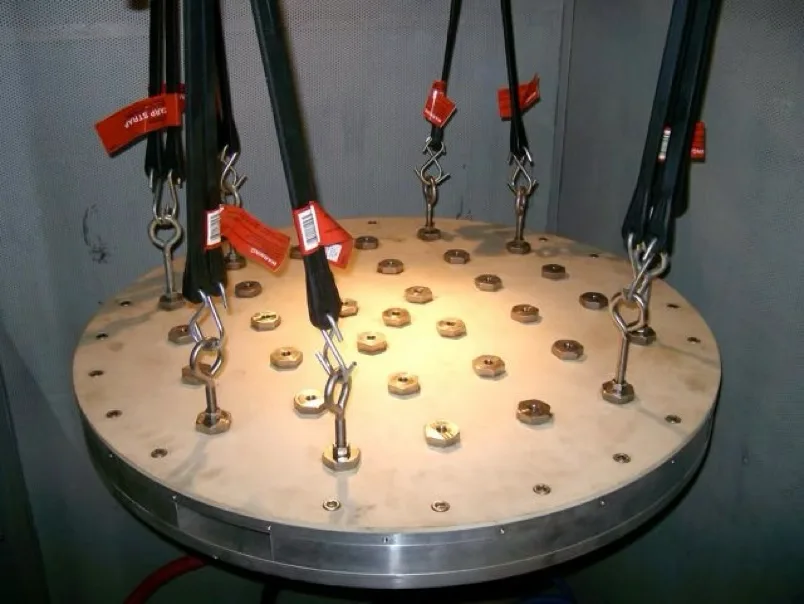
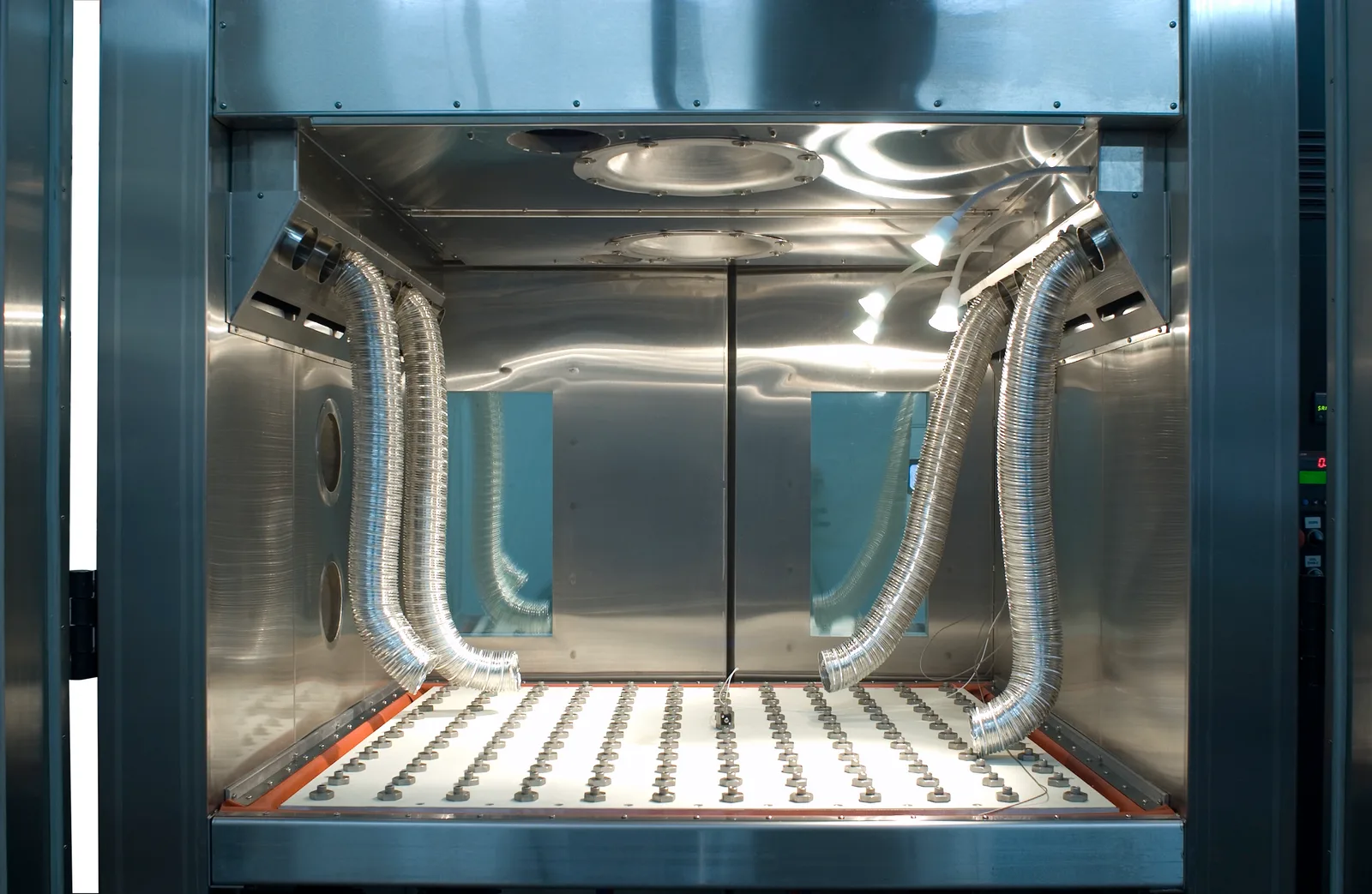
Hanse’s vibration systems deliver six-degree-of-freedom (6-DoF) motion — tri-axial vibration plus rotation around each axis — across a 10 Hz to 10,000 Hz frequency range, with up to 100 GRMS available on most table sizes. The ceramic-coated vibration table concentrates 90% of vibration energy in the 10–4,000 Hz range, where most real-world structural resonances occur. Standalone systems come in the same table sizes as the VTC chamber range — from 12 × 12 in up to 70 × 70 in, plus 36 × 78 in and 48 × 102 in long formats — with Watlow controllers run through Hanse’s ChamberCore software, up to 16 simultaneous accelerometer channels, and vibration fixtures available in metric or English bolt patterns. Systems can be combined with temperature control for programmable, synchronized environmental-plus-vibration test profiles, and the vibrators and vibration tables carry a 3-year warranty. See full specifications on our vibration systems page.
How to Choose the Right System
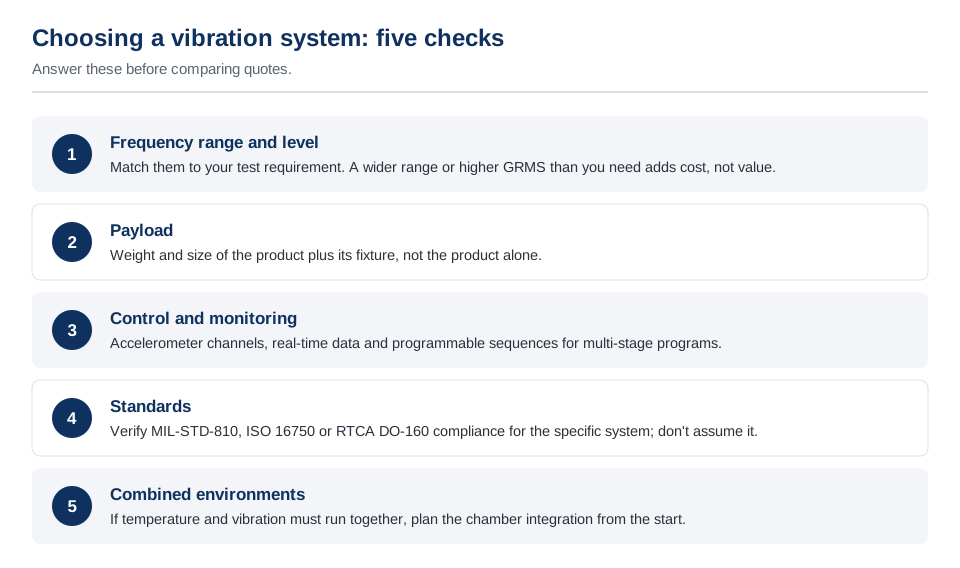
Match frequency range and amplitude to your actual test requirements — paying for a wider range or higher GRMS than your application needs adds cost without adding value.
Confirm payload capacity fits your specimen — both the weight and the physical dimensions of what you're testing, including any fixturing.
Check for the control and monitoring features you'll actually use — real-time data integration, multi-channel accelerometer monitoring, and programmable test sequences matter more for complex, multi-stage programs than for simple pass/fail screening.
Confirm standards compliance up front if a customer or industry standard applies — MIL-STD-810, ISO 16750, and RTCA DO-160 compliance should be verified against the specific system, not assumed.
Consider integration with environmental chambers if your program needs combined temperature-and-vibration testing — this is common enough in automotive and aerospace testing that it's worth planning for from the start rather than adding later.
Best Practices for a Vibration Test Program
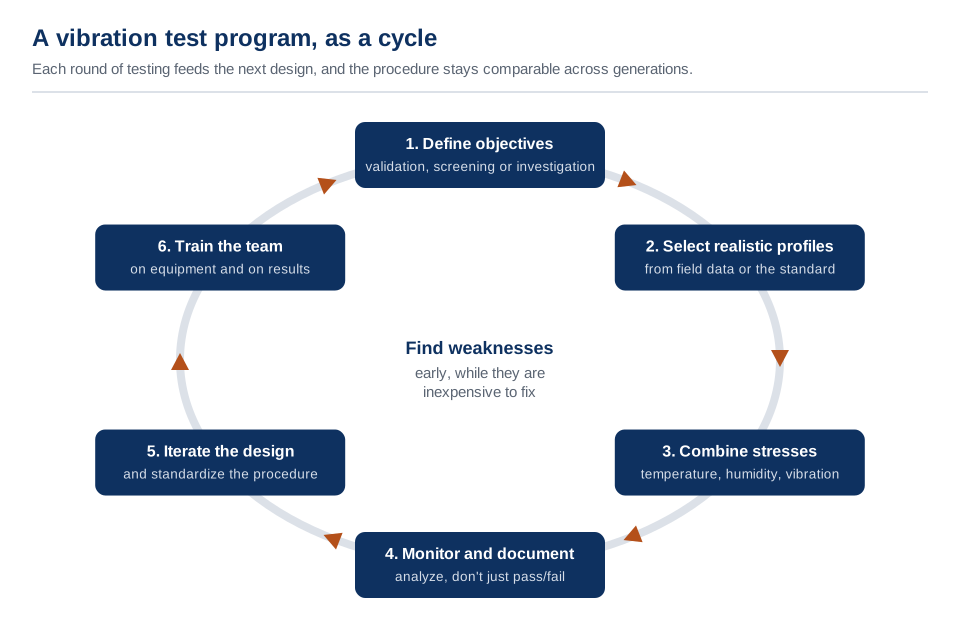
- Define clear test objectives before selecting equipment or a test profile — design validation, production screening, and failure investigation call for different approaches.
- Select test profiles that reflect real-world conditions your product will actually encounter, rather than defaulting to a generic standard profile.
- Combine vibration with other environmental factors (temperature, humidity) where real-world use would combine them — isolated single-stressor testing can miss interaction effects.
- Monitor and document data closely, and analyze results systematically rather than treating each test as a one-off pass/fail event.
- Iterate designs based on findings, and standardize your test procedures so results are comparable across product generations.
- Train personnel on both the equipment and the interpretation of results — a vibration system is only as useful as the team running it.